
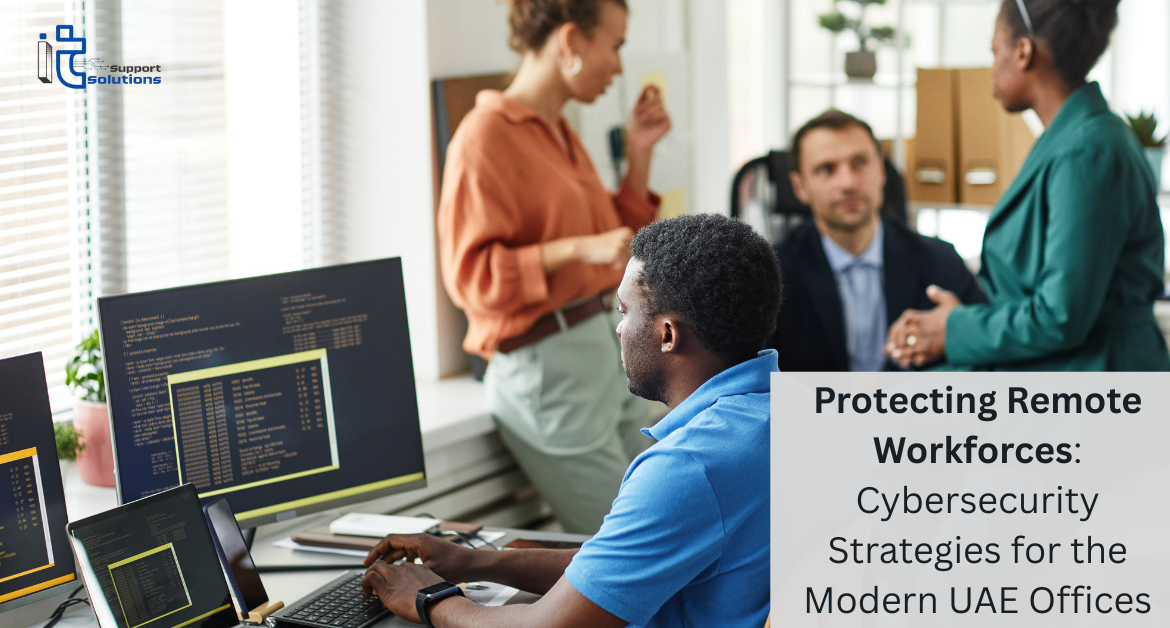
As more UAE businesses embrace flexible work arrangements, one challenge continues to demand attention: cybersecurity. Whether your team works from a satellite office in Sharjah or logs in from homes in dubai or beyond, the modern workplace now lives beyond the traditional office walls. With that shift comes a heightened risk to your digital infrastructure.
Today’s cyber threats are more advanced and more targeted. Hackers no longer just aim for big corporations. They exploit overlooked vulnerabilities in remote setups, especially where staff rely on personal devices or unsecured networks. For companies in the UAE, where customer trust and regulatory compliance are critical, there’s no room for error. Here’s our Cybersecurity Strategies for the Modern UAE Office.
1. Implement Robust Access Management Across Remote Teams
In a physical office, access to sensitive systems is limited by physical presence and internal firewalls. That protection doesn’t exist when staff are spread out. Businesses need to take a hard look at who can access what, and from where.
Using a virtual private network (VPN) is no longer just a “nice to have.” It’s essential. Every user should connect through a secure channel, especially when using public Wi-Fi or home internet setups. Multi-factor authentication (MFA) adds another level of security—without it, a leaked password could mean disaster.
Restrict access by role. For example, A sales executive should not have the same backend access as a finance manager. Keeping these permissions tight helps contain risks if an account ever gets compromised.
2. Enforce Endpoint Security and Device Compliance
Remote teams rely heavily on devices- laptops, smartphones, and tablets- to do their work. But these tools are often left vulnerable. It’s not uncommon for a staff member to install a third-party app or skip an important update, opening the door for malware.
Every business needs a clear device policy. Staff should use company-approved hardware with updated security software. If that’s not possible, implement a bring-your-own-device (BYOD) policy that requires users to follow certain security protocols.
Also consider endpoint protection tools that give your IT team visibility into device activity. These tools allow them to respond quickly if they notice unusual behavior or if a device is lost or stolen.
3. Prioritize Employee Cyber Awareness and Training
Your team might be skilled at their jobs, but that doesn’t mean they’re ready to spot a phishing email. In fact, human error remains one of the leading causes of data breaches worldwide, and the UAE is no exception.
Avoid generic training approaches that fail to address real-world risks. Instead, build sessions that reflect real scenarios your staff might face. Show examples of email scams written in both Arabic and English. Walk through how to report a suspicious link or what to do if they suspect their device is compromised.
Make training part of your culture, not a once-a-year checkbox. Regular updates help keep everyone alert and remind them of their role in keeping company data safe.
4. Strengthen Cloud Infrastructure and Data Permissions
Most remote work today happens in the cloud—shared drives, online communication platforms, and project management tools. But ease of use can often lead to relaxed security.
Ensure that all cloud tools used by your team are configured with proper access rules and encryption. Monitor logins, track file sharing, and deactivate accounts the moment an employee leaves. Don’t wait for something to go wrong.
Also, consider working with a UAE-based IT partner that understands local data regulations. They can help set up compliance-friendly tools while maintaining flexibility for your remote teams.
5. Develop a Proactive Cyber Incident Response Plan
Preparation is half the battle. If a device is compromised or an account is hacked, your team should know exactly what steps to take. Delay is the enemy in these situations.
Develop a clear response protocol. Who do they contact first? What systems get shut down? How do you notify clients if their data is at risk? These questions need answers before you’re in the middle of a crisis.
Run simulations a couple of times a year. Treat them like fire drills. The better prepared your team is, the quicker and more effectively you can respond.
Conclusion
The UAE’s business world is changing fast, and your cybersecurity strategy needs to keep up. Remote work can offer great flexibility and productivity, but only if it’s built on a secure foundation.
At IT Support Solutions, we help organizations design custom security frameworks that fit the demands of today’s modern workplace. Whether you’re scaling your team across multiple emirates or managing sensitive client data, we’re here to ensure your operations stay protected, wherever your people are. If you want to know more about how to prepare your Business for Emerging Threats, then check out our blog here.

