
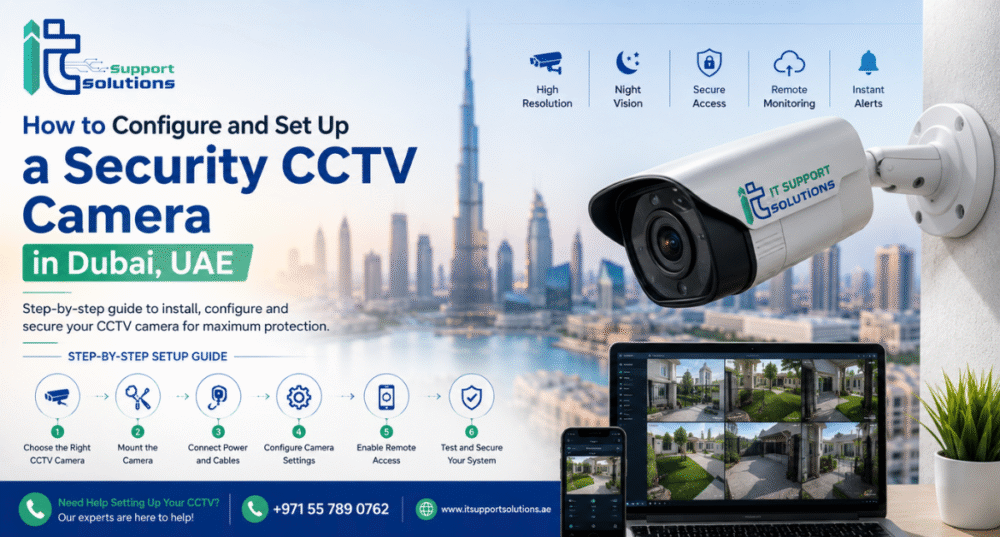
Your business’s security warehouse, office or store, villa, or commercial properties in Dubai are crucial. The installation of a CCTV system professionally allows continuous surveillance to stop any unlawful activities as well as record footage in case there are any events.
If you’re in search of “CCTV installation near me” services, it is important to pick the best devices and service providers. The latest CCTV technology can give the user more than recording video. There are night vision cameras, IP camera remote control, and motion sensors, as well as other advanced technologies to make a great security surveillance solution for your organization.
We provide professional CCTV solutions for both businesses and properties located within Dubai and across the UAE, starting with the installation of cameras, the configuration of the network, and recording through remote control, as well as technical support.
This article explains the components of a CCTV system, as well as the fundamental procedures for configuring cameras.
Why Is a CCTV Camera System Important?
The aspect of security is essential to the running of companies. There is equipment and information, as well as inventory, customers, and employees in the organization that have to be secure.
The expertly installed CCTV installation service provides 24/7 security cameras for the most critical locations. Video footage recorded can help companies when investigating any events and spot suspicious activity.
Based on the kind of facility, surveillance camera installation services can accommodate indoor and outdoor settings.
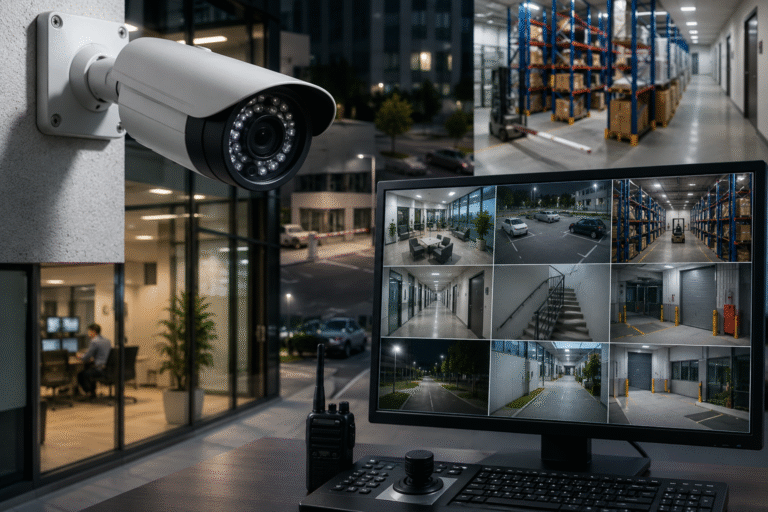
The installation of a CCTV system can help in the following areas:
- Controlling the entrances and exits to the buildings
- Reception zones
- Parking garages
- Warehouses and storage spaces
- Restricted zones
- Retail premises
- Office premises
- Perimeters of building
- Assets and machinery that are valuable
Businesses looking for CCTV installation services in Dubai It can assist you to pick the best cameras, network equipment, and recording as well as storage.
Essential Components of CCTV Systems
An advanced CCTV installation has a number of parts that are used together to record the transmission; transmit, archive, and present security footage. The knowledge of these parts helps you pick the best CCTV system for your premises.
1. CCTV Cameras
CCTV cameras constitute the most important elements of any security system. Based on the requirements of your home You can pick from dome cameras, IP cameras, bullet cameras, turret cameras, PTZ cameras, and various other models that are specialized. The latest IP cameras are extremely popular due to their ability to transfer video via a network and include features such as high-resolution recording, remote monitoring, and motion detection, as well as analytics.
In selecting cameras, take into consideration:
Monitoring of the number of zones
Image resolution is required.
Indoor or outdoor installation
Conditions of lighting
The required viewing distance
The need for night vision
Field of view that must be required
Monitoring requirements for remote monitoring
Network infrastructure that is available
IT Support Solutions can help determine the security of your premises and recommend the best cameras for the security needs of your business.
2. Monitoring Station business.
Monitoring stations allow individuals with access to the station to watch both live and archived CCTV footage. In accordance with the size of the home, monitoring could be accomplished by using one monitor, several displays, computers, or even tablets that work with compatible smartphones. The most modern CCTV solutions can also support remote viewing. It allows owners to watch their home even when not on the property. If you have a larger facility, multiple screens can be utilized to view multiple camera feeds at the same time.
3. Network Cables, Switches, and Routers
Network infrastructure plays a key part in the modern CCTV systems that are IP-based. Cameras require dependable connectivity to connect with NVRs and monitoring equipment, as well as various other network elements. Based on the type of system used, depending on the system, installation options could include:
Ethernet cables
PoE switches
Switches for networks
Routers
Wireless networks
Fiber connections to support larger installation
An appropriately configured network will offer reliable video transmission and remote monitoring and better administration of the system. IT Support Solutions can help connect CCTV cameras to your current IT infrastructure and also consider connectivity and bandwidth as well as security expansion.
4. Video Recorders
Video recorders store video footage taken by CCTV cameras to allow it to be later reviewed. The two most frequently used recording methods are DVR and NVR.
DVR – Digital Video Recorder: DVR systems typically work together with traditional CCTV cameras. The video signals are transferred to the recorder via suitable cabling.
NVR – Network Video Recorder: NVR systems are often employed in conjunction with IP cameras. Videos are transmitted via the network and then recorded through the NVR.
CCTV systems based on NVR are commonly employed in commercial and modern installations since they accommodate high-resolution cameras, internet connections, remote surveillance, and the possibility of future expansion. The best recorder for you depends on your camera’s capabilities and infrastructure, your recording needs, and your budget.
5. Data Storage
Camera footage needs sufficient storage space for recording and playback. The storage requirements are based on the number of cameras used, the resolution of the video frame rate, and the record time, as well as the retention time required. Security systems generally use devices that are designed to record continuous video recording instead of traditional hard drives in computers.
In the event of planning storage, take into consideration:
Cameras in the number
Camera resolution
Recordings that are continuous or based on motion
Retention period required
Days of film needed
Storage capacity
Needs for backup
Professionals can estimate the amount of storage required prior to installation to ensure important footage is kept to the time frame required.
How to Configure and Set Up CCTV Cameras on a Network
The configuration of the network is a crucial procedure in the installation of IP security cameras. It is possible to vary the process dependent on the camera’s manufacturer, NVR, and router, as well as the architecture of the network. If you’re not experienced with the configuration of networks It is advised to configure the system by experienced experts. Uncorrect IP settings or inadequate configurations could affect the camera’s connection and security of the system.
Step 1: Connecting the IP Camera to the Network
The initial step will be connecting the IP camera to the appropriate network component depending on your installation. These include:
Connect the camera to the PoE switch
Connecting the camera to an appropriate NVR
Connect the camera to the switch on the network
The wireless camera should connect to a secure Wi-Fi network
Make sure the camera is connected to an electrical source as well as a stable network connection prior to proceeding.
Step 2: Identify the Camera’s IP Address
A camera with an IP address requires an IP address for communication with other devices in the network. An IP address will typically be traced using the discovery software of the manufacturer, the network configuration interface (NVR), the router, or another method supported by the manufacturer. When the camera is discovered, it is possible to access its settings interface by using the software that is supported by the manufacturer or the web interface.
Step 3: Log In and Change Default Credentials
Go to the settings tab of your camera, and then log in through the details that have been provided to you by the manufacture. If you want to have added security, then you should change the default password. You can also set an administrative password. Do not keep your default login details; otherwise, it may put your CCTV at risk of unauthorized access.
Step 4: Set up Your Network Settings
Go to the camera’s network configuration section. Enter the necessary settings for the network you are using.
Based on the particular system These could include:
IP address
Subnet mask
Gateway
DNS configurations
DHCP, static IP configuration
Port settings for networks
In the case of larger-scale CCTV installations, the right fixed or reserved IP addresses will simplify the management of cameras. The setting for your network must be compatible with the existing architecture of the network for your property.
Step 5: Add the Camera to the NVR
If the NVR is in use to add the camera, do so via the interface for managing cameras of your NVR. Modern systems are able to automatically find compatible cameras on the network. If the camera cannot be recognized automatically, it might have to be manually added by using its IP address as well as the login password. When you have added it, verify that you are sure that the NVR is receiving the video properly.
Step 6: Configure Recording Settings
Once the camera is connected After connecting the camera, set up the appropriate recording settings. Based on the security system, it is possible to choose from:
Continuous recording
Motion-based recording
Recordings scheduled for the future
Video resolution
Frame rate
Video quality
Recording of events prior to them
After-event recording
The right location will depend on how secure the building needs to be.
Step 7: Remote Monitoring Configuration
One of the most important features of contemporary CCTV technology is remote monitoring of your home.
The compatible CCTV systems let authorized users:
View live camera feeds
Check recorded footage
You can receive alerts on specific topics.
Monitoring multiple sites
Check cameras remotely
Remote access should always be configured securely using strong credentials, appropriate permissions, updated firmware, and manufacturer-supported connection methods. IT Support Solutions can help organizations set up remote monitoring that is secure as a part of their intelligent surveillance security systems.
Step 8: Test the Complete CCTV System
After installing and configuring, make sure to test all components in the device. Check:
Live feeds of live video
Recording
Playback
Camera angles
Night vision
Motion detection
Connectivity to networks
Storage capacity
Remote access
Notifications if applicable
Tests help identify problems with the configuration prior to when the CCTV system goes into operation.
CCTV Installation Best Practices in Dubai
A CCTV system will be best by having cameras that are placed correctly as well as configured and kept in good condition. Be aware of these best practices in planning your project.
Select Strategic Camera Locations
Set cameras in areas where they will be able to monitor areas of importance while also minimizing blind areas. Parking areas, reception areas, and storage spaces, as well as restricted areas, may need priority coverage.
Consider Lighting Conditions
However, lighting and shadows that are not lit well, as well as glare and backlighting, may influence the quality of the images taken. Remember that you have to choose cameras suitable for the lighting of the region where they will be installed.
Use Suitable Outdoor Equipment
Outdoor cameras must be built to work in the conditions of the environment where they are going to be put in. Correct mounting and protection could help improve the durability of equipment.
CCTV Network Security
The cameras are linked with the network and therefore form part of the IT infrastructure. Strong passwords and network configuration, among others, should be put in place.
Plan for Future Expansion
Companies should think about future needs before deciding on their equipment for CCTV. A system with a scalable IP will make it much easier to install additional cameras and security tools as an organization expands.
Why Professional CCTV Installation Matters
Cameras are only one aspect of creating an efficient surveillance system. Camera placement, cable networking configuration, the power supply, the recording equipment storage capacity, and the settings of software will all impact the efficiency of a CCTV setup. Professionally trained CCTV camera installation company in Dubai will assess the location and decide where cameras can be put in place to ensure adequate coverage.
The professional installation could consist of:
- Site evaluation
- Planning of CCTV systems
- Camera selection
- Camera positioning
- Security Cameras Fitting Service
- Cable installation
- Configuration of networks
- The NVR/DVR configuration
- Planning for storage
- Remote monitoring of configuration
- Testing of the system
- Troubleshooting
- Updates and maintenance
IT Support Solutions combines CCTV installation along with IT infrastructure knowledge, assisting companies in designing CCTV systems that are compatible in conjunction with their current network.
Advanced CCTV Installation Services for Businesses
Organizations nowadays do not simply demand the provision of standard video surveillance through the security system. Warehouses, office spaces, retail stores, institutions, hotels, industries, and other organizations might need an advanced version of CCTV installation that provides options for remote monitoring, high-quality video capture, intelligent surveillance, and robust network structure. There can be many aspects to a customized CCTV system installation depending on various parameters like the property size, the number of cameras required, entry/exit points, parking places, restricted areas, storage spaces, outside perimeter, lighting conditions, network infrastructure, video storage needs, and remote monitoring requirements. IT Support Solutions can assist organizations in installing a customized CCTV security system as per their security requirements.
CCTV Solutions for Businesses in Dubai and the UAE
All companies have different needs in terms of security measures. While a small company office might require a few cameras installed, an industrial unit or a warehouse might have many needs for both indoor and outdoor surveillance. Professional CCTV systems in the UAE can meet all types of security needs, ranging from visitors’ and employees’ surveillance, securing the asset, parking area surveillance, securing the warehouse, entrance and restricted area surveillance, remote property surveillance, and investigation and perimeter surveillance.
For selecting the right company providing CCTV solution, businessmen in Dubai should take into account not only the cost of the system but also many other aspects such as installation expertise, ability to integrate with existing networks, security measures, technical assistance, system scalability, reliability, and after-sales service. IT Support Solutions offers customized CCTV systems that are aimed at assisting you to improve your security network.
Finding CCTV Installation Services Near Me
If you’re looking for CCTV installation solutions near me, pick a service capable of handling the whole installation instead of just fitting cameras. Professional CCTV providers will be able to comprehend the needs of your premises, suggest appropriate camera models, design for coverage, set up the recording equipment, incorporate networks, and verify the final installation.
IT Support Solutions provides CCTV installation services in Dubai to businesses as well as properties that require reliable surveillance equipment. If you require CCTV in an office, villa, warehouse, commercial structure, or industrial facility, the appropriate combination of technology and cameras will give you better surveillance and better control.
Why Choose IT Support Solutions for CCTV Installation?
The right CCTV installer is a crucial aspect of creating a secure security system. IT Support Solutions can assist companies in CCTV design installations, setup, and remote monitoring, as well as technical assistance. The services we offer for CCTV include:
- CCTV system consultation
- Camera selection
- Assessment of the Site
- Professionally installed
- Surveillance Camera Installation Services
- The configuration of DVR and NVR
- Integration of networks
- Remote monitoring
- Planning storage
- Testing of the system
- CCTV upgrades
- Technical support continues to be provided
Combining CCTV knowledge together with IT infrastructure experience, IT Support Solutions can aid businesses in creating intelligent security systems for surveillance that can be scalable, practical, and compatible with their technological environment.
Final Thoughts
The process of setting up a CCTV camera system is many more things than just installing cameras and connecting cables. Cameras, networking, record equipment, storage, surveillance equipment, security settings, and other devices should all work in tandem to ensure reliable security. With modern CCTV technology, businesses are able to profit from high-resolution cameras, remote monitoring, smart night vision, and detection along with other advanced features. If you require basic security or advanced CCTV installation, choosing the best equipment and installation partner could be a major difference.
If you’re in search of CCTV installation solutions in my area, IT Support Solutions can aid you with planning, installing the system, setting it up, and manage the perfect CCTV system for the requirements of your business.
If you require professional CCTV installation services in Dubai, security camera fitting services, and customized CCTV systems in the UAE, please contact IT Support Solutions to discuss the security requirements of your home and to find the best CCTV solution.

