Small and medium businesses take network security in the incorrect way: they purchase an antivirus program, then install a firewall, and then assume that they’re secure. What’s the problem? The modern cyber threat doesn’t run by following a set of rules. They exploit the gaps in the software you are using. An effective strategy doesn’t start using products but being aware of your own business risks and then building security measures for your network around the risk.
This article takes a new perspective on the basics of network security. Instead of listing the methods, we’ll explain the ways SMEs should consider security in the same way that experts do through determining what’s really on the line, where actual vulnerabilities are, and the best way to create an effective defense plan that evolves as the company grows. It’s a strategy IT Support Solution uses with each client we have across the globe.
Start With What You're Actually Protecting
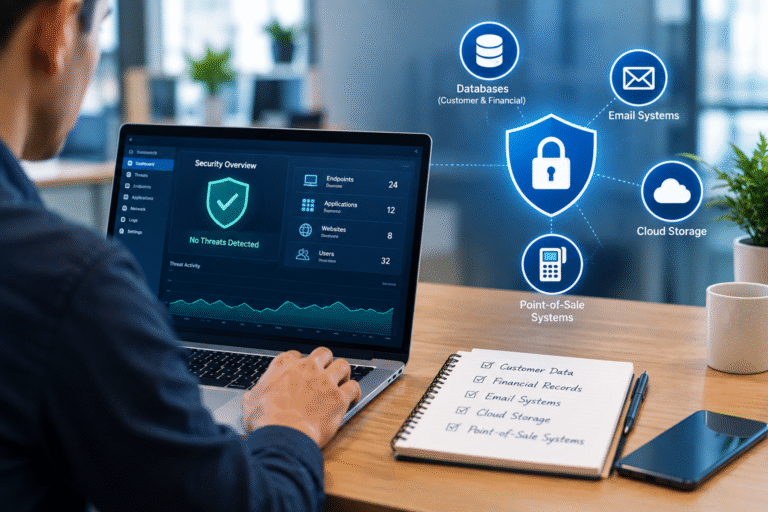
Prior to investing in a security system, SMEs need to answer one simple question: what is the outcome if this particular system, device, or other piece of information has been breached? If a retail company loses payments to customers, it could have different implications than a logistics firm being unable to access their scheduling system for the duration of a single period of time.
Mapping out the most critical assets—databases of customers as well as financial records, email systems, cloud storage systems, and point-of-sale systems—provides you with the foundation for focusing your security in the areas that matter most rather than spreading your small budget to spread every aspect equally. The risk-based approach is the basis of each of the best security options for corporate network engagement. And that’s precisely where the majority of DIY security measures fail.
The Layered Defense Concept (Defense in Depth)
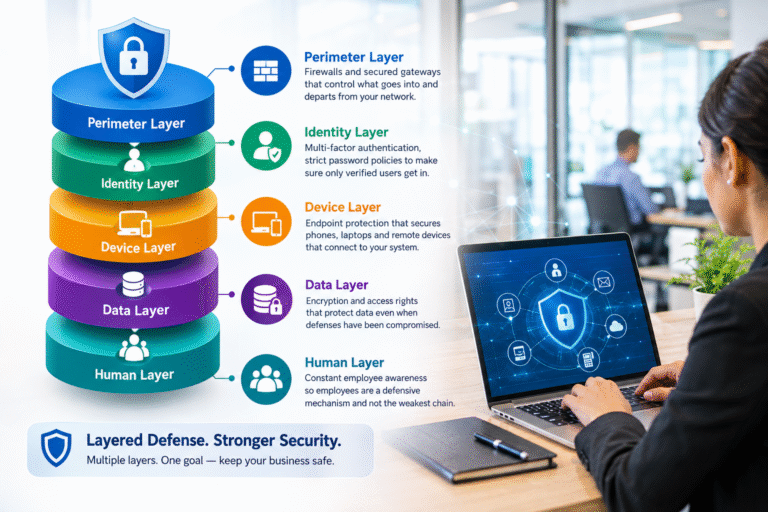
There is no single solution to be able to stop all threats. Security teams with experience build systems that are layered in which, in the event that one layer fails, an additional layer is in place to stop the threat before the damage is done. For SMEs the typical scenario is as follows:
Perimeter Layer: Firewalls, as well as secured gateways that control what goes into and departs from your network.
Identity Layer: Multi-factor authentication, strict policies on passwords to make sure only users who have been verified are allowed in.
Device Layer-Endpoint Protection that secures phones and laptops as well as remote devices that connect to your system.
Data Layer: Encryption and access rights that protect data even when defenses have been compromised.
Human Layer—Constant employee awareness so that employees are a defensive mechanism and not the weakest chain.
The layered approach is the key to the way IT Support Solution designs network security strategies in Dubai to help businesses grow. It’s not about purchasing more equipment. It’s about ensuring your tools function together.
The Hidden Risk: Third-Party and Vendor Access
A common issue that SMEs ignore is risk from third parties. If your accounting company or marketing agency or IT vendor is connected to your system, the security vulnerabilities of their systems are your security weakness. Many of the incidents aren’t caused by an attack directly but rather by a poorly secured connection to a vendor.
Examining who is able to access your network, restricting the permissions granted to third parties to what’s required, and forcing suppliers to adhere to the minimum security requirements is a procedure that many SMEs do not take; however, it’s actually one of the fastest methods to eliminate a significant security gap.
Cloud and Remote Work: The New Perimeter
The old concept of the concept of a “network perimeter” has disappeared for the vast majority of SMEs. Since employees are working from home and more business information is being hosted on cloud-based platforms, security must now be able to follow information isll as the user, not just the physical building in which offices are located.
That means you need to secure WiFi connections at home, which requires VPNs to allow remote access as well as applying the same controls for access to cloud services as you do to servers on site. Enterprises looking for reliable security solutions for their networks in Dubai increasingly opt for this since their teams are remotely or in a hybrid mode as well, and traditional security methods do not reflect this fact nowadays.
Having a Plan Before You Need One
The third, and the most neglected, aspect of the network security fundamentals is planning for incident response. The majority of SMEs don’t have a formal plan of what to do within the first hour after identifying an incident—who should be notified, how to limit the risk, and how to interact with their customers. The delay can turn an easily managed incident into a massive emergency.
A simple, well-written response plan, even the simplest one, significantly reduces time for recovery and minimizes any damage. This service IT support solution builds into each and every customer interaction in the network security solution UAE market since prevention isn’t the only way to create the entire approach.
Why Expert Guidance Changes the Outcome
Small businesses don’t have to be security specialists overnight; they require access to experts who are already. A trusted company brings decades of hands-on expertise in identifying threats before they turn into issues, and not later. IT Support Solution has spent many years assisting SMEs across various industries to create effective, appropriate security plans, not a one-size-fits-all solution. That’s why IT Support Solution is regarded as one of the best business partners who want security without the need for complexity or costs.
Turning Security Into a Business Advantage
Secure networks aren’t only concerned with avoiding catastrophes; they create trust among customers as well as investors, partners, and customers who have come to expect companies to consider data security seriously. SMEs that consider security an essential aspect of how they run their business, and not being a secondary consideration, present themselves as being more durable, more trustworthy, and better prepared to sustain growth over the long term. IT Support Solution can assist in making that change practical, cost-effective, sustainable, and affordable.
FAQs
- What’s the difference between risk-based and strategy-based tools for network security?
The tool-based approach installs security tools and hopes that they’ll be enough. The risk-based method first establishes the systems and data that matter most to the company, then creates security measures specifically for the most important priorities, which results in better allocation of budgets as well as better protection for the real world.
- What is the reason that third-party access to vendors matters for the security of your network?
Partner and vendor access to your system can create vulnerabilities that you aren’t able to control directly. If their security isn’t strong, the attackers could use the connection to gain access to your network, even though you have strong defenses.
- How can remote work impact the requirements of security for network networks in SMEs?
Remote work eliminates typical office-based network security perimeters, and security needs are extended to include home wireless networks and mobile devices as well as cloud platforms—which requires VPNs and strong authentication and consistent access rules regardless of where you are.
- Do SMEs really require an incident strategy for responding to an incident?
Yes. An easy, well-defined strategy for what you should do right away after discovering a security breach could significantly speed up recovery as well as limit the financial damage and stop a minor problem from becoming an emergency.
- What can the IT support solution help SMEs increase their network security?
IT Support Solution assists companies to evaluate the risk as well as design and implement layered security measures to ensure cloud and remote access, control risk from vendors, and create emergency response plans that are customized to the size of the business budget and size, as well as the sector.
- Do you think layering defense (defense in depth) is cost prohibitive for small businesses?
Not necessarily. The concept of layering defense is more strategy than equipment—numerous layers, such as access control as well as staff training, are very little, but can significantly lower risk overall when combined with security measures already in place.
