
Change defines how organizations function today compared to just several years past. What once filled office spaces now shifts toward responsiveness, interconnectivity, efficiency beyond prior standards. Instead of older methods, digital tools shape daily operations – supporting output, minimizing lag during tasks, enabling team alignment even across divisions. Systems that link people, data, processes become central rather than optional extras within modern enterprise.
Now arriving at digital methods, firms across the UAE place focus on lasting progress through smoother performance. Rather than manual steps, smart setups guide routine tasks, shaping workspaces alert to shifting needs. From linked gadgets to unified software, operations grow more responsive under system-driven management. With cloud frameworks supporting seamless exchanges, decision-making becomes clearer. Employee engagement rises when surroundings adapt without delay. Control strengthens where technology integrates quietly into everyday function through smart office automation solutions that improve modern workplace performance.
Across Dubai and the wider UAE, workplaces gain access to intelligent systems through IT Support Solutions UAE. These setups operate with precision, designed to link teams securely. Where needs shift, technology adjusts ahead of pressure. As systems link with care, access flows without interruption. Safeguards exist woven into each layer of operation. With foresight built in, performance holds steady across time. Systems respond efficiently because planning anticipates change.
Smart Office Automation Made Clear
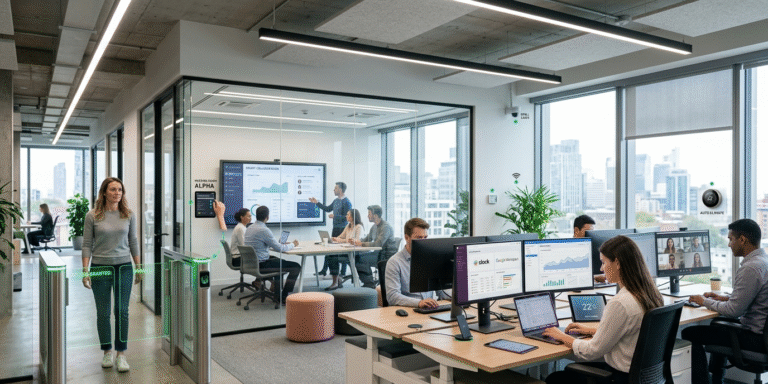
Connected tools within a smart office rely on updated technology to interact automatically. When integrated, equipment adjusts routines without constant human direction. Efficiency grows because repetitive actions take less time. Operations flow more smoothly due to coordinated functions across platforms.
Automation can support multiple business functions including:
- Smart communication systems
- Cloud collaboration
- Intelligent meeting rooms
- Automated lighting and energy controls
- Access management systems
- Security monitoring
- IoT-connected devices
- Data management
- Remote work integration
- Workflow automation
Connected workspaces depend on seamless links between tools, unified oversight, one task following another without pause. Where equipment communicates across networks, firms observe operations remotely, adjustments happen step by step. From lighting to access, functions respond automatically, changes unfold quietly behind the scenes. Efficiency rises when systems act together, yet errors fade into background. Devices report status constantly, decisions form based on steady streams of data. Oversight becomes smoother, reactions grow faster, effort reduces over time.
Smarter Office Spaces Replace Old Business Setups
Even when systems operate in isolation, linking them by automated processes brings unity among separate environments. While many rely on disjointed applications, sluggish communication, recurring actions, and inefficient use of time, connection via streamlined sequences supports smoother operation. Where duplication often occurs, structured automation reduces redundancy across different software. Though scattered methods remain widespread, synchronized flows improve consistency between digital spaces.
A shift toward centralized digital operations emerges when technology links functions once kept apart.
Companies adopting automation solutions often experience:
- Faster communication between teams
- Improved workplace productivity
- Better resource management
- Reduced operational costs
- Improved energy efficiency
- Stronger workplace security
- Simplified remote collaboration
- Better employee satisfaction
- Improved scalability for business growth
Even as worldwide patterns shift, businesses in Dubai continue refining their internal systems because changing markets demand quick adaptation, flexibility, together with uninterrupted links. Instead of functioning separately, combined environments merge sound communication, video conferences, instant interaction, online gatherings, also shared processes – resulting in clear gains in task execution. Still, adoption depends heavily on infrastructure readiness and long-term planning cycles within each entity.
Smart Communication Tools Help Teams Work Together
Among workplace essentials, exchange of information holds strong importance. Through unified design, automated office setups link audio interfaces alongside meeting software, chat networks also share work applications within a single operational framework.
Communication today moves beyond the traditional office. Employees stay connected even when scattered across cities or working from home. This shift relies on tools that link people without confusion. Flexibility emerges where location once limited contact. Work continues despite distance because systems adapt to how people operate now. Organizations find advantage in this constant connection. Efficiency grows when barriers between places fade. Tools function together rather than separately. Distance matters less when interaction flows naturally. Performance often follows where ease of contact exists.
- VoIP communication systems
- Cloud telephony
- Video conferencing integration
- Internal collaboration platforms
- Call management systems
- Unified messaging
- Mobile accessibility
When cloud systems handle messaging, operations adapt without fixed locations. Efficiency grows because workflows adjust across distributed teams. Contact methods become smoother since responses reach people faster. Structure shifts allow updates to flow clearly between departments.
Automation Improves Workplace Efficiency
Among the chief benefits of automated office systems is improved workflow performance. Time spent on routine duties manually might instead contribute to company progress along with output levels.
Through automation, repetitive office duties become manageable without constant oversight. When processes run on their own, operations gain consistency. Tasks once manual now proceed through system triggers. Efficiency emerges where delays used to occur. Workflow continuity improves under structured digital guidance. Procedures follow preset logic instead of human scheduling. Over time, fewer interruptions appear in task sequences. System-directed actions reduce reliance on individual input. Operations advance even during off-hours. Execution remains steady across varied conditions.
- Meeting room scheduling
- Device management
- Employee attendance tracking
- Visitor access
- Lighting control
- Temperature management
- Workflow approvals
- Security monitoring
- Reporting processes
With fewer mistakes made by people, work environments grow more reliable when automation takes over routine tasks. Because certain duties demand less attention, staff can shift toward planning and long-term thinking. Tools like digital scheduling for rooms, sensors that monitor how spaces are used, plus software managing facility operations allow companies to make better use of their physical offices. Efficiency rises when usage patterns guide decisions instead of assumptions.
Smart Security and Access Control
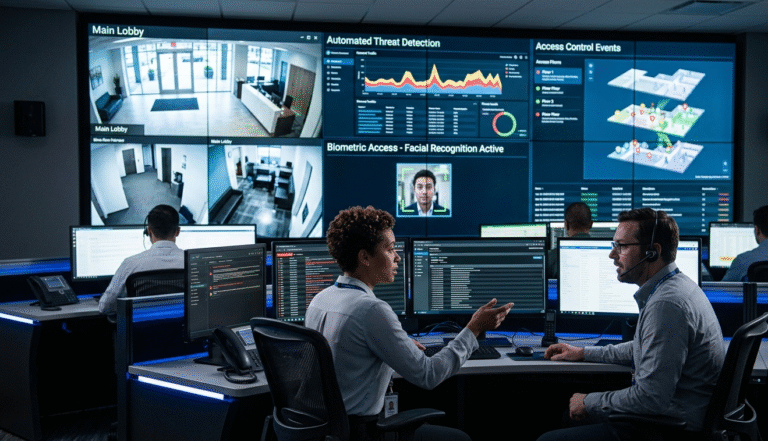
When workspaces grow increasingly linked, safeguarding information gains greater weight. Integrated surveillance combined with adaptive entry controls enhances protection across tangible and virtual environments by using smart building technologies.
Secure settings now matter most for companies aiming to shield staff, technology setups, digital connections, along with vital corporate data. Today’s workplace tools driven by automated processes may involve:
- Biometric access systems
- Smart surveillance solutions
- Access control systems
- Cybersecurity monitoring
- Automated threat detection
- Secure network management
- Cloud security integration
Because of automated workflows, threat response grows more precise. Visibility expands when tools coordinate actions without delay. Protection strengthens through consistent execution across networks. Faster reactions emerge where manual steps once slowed outcomes. Risk declines if processes operate with fewer errors. Systems stay aligned since communication happens in real time. Efficiency rises even under complex conditions.
Data and Cloud Tech Enable Smarter Work
Among today’s corporate practices, information guides choices more than most tools. Where offices grow intelligent, protection of records matters as much as pathways to storage systems combined with frameworks built for analysis – each shaping how work advances.
Cloud technologies allow businesses to:
- Access systems remotely
- Improve collaboration
- Scale resources efficiently
- Protect business continuity
- Improve storage flexibility
- Simplify data sharing
- Support remote teams
Structured data systems support organizational reporting, though they equally shape how insights emerge through automated analysis. Efficiency in managing information grows when engineering methods evolve, especially where artificial intelligence guides choices and scales daily functions.
Offices Adapt with Growing Tech
Enterprises move through constant shifts. Supporting upcoming growth becomes essential when systems avoid restricting daily functions. Yet infrastructure adapts only if designed beyond current needs. Without flexibility, progress slows despite advances elsewhere. Expansion thrives where limits do not shape decisions.
As companies evolve, intelligent office setups adjust without disruption. When staff numbers rise, offices multiply, remote arrangements emerge, or digital workflows broaden, adaptive technologies maintain consistent performance. Growth occurs steadily where infrastructure responds flexibly.
Work begins where technology supports change without resistance. Where computing power moves beyond physical limits, operations gain steady momentum through remote access networks. Resilience emerges not from hardware alone, but from how smoothly tasks adapt using smart software tools. Across Dubai and the UAE, companies rely less on fixed setups, more on responsive digital frameworks that evolve quietly over time. Behind daily functions sits an invisible structure – essential, always active, rarely noticed. Automation strengthens consistency; when integrated well, interruptions grow rare. Systems communicate not because they must, but because design allows it naturally. Long-term readiness appears gradually, shaped by choices made today.
Smart Office Automation Changes How Work Happens
A shift has occurred where desks and computers alone do not shape office environments. Instead, performance grows through responsive technologies – ones that adjust how people exchange information, manage daily functions, protect data, and maintain focus with greater precision.
Office tools that operate with intelligence allow companies to link their spaces so workers achieve tasks faster even as management observes processes closely. Starting with smart messaging setups moving toward self-running task sequences along with modern workspace devices these changes keep altering how firms function going ahead.
IT Support Solutions UAE helps businesses across Dubai and the UAE implement secure, scalable, and intelligent smart office automation solutions in Dubai designed to support modern business growth and digital transformation.

